
-1.svg)


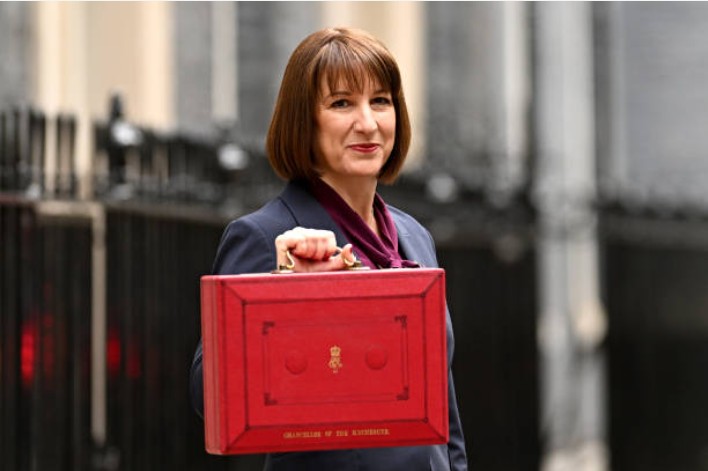
The recent Budget delivered by Chancellor Rachel Reeves marks a significant shift in the UK’s tax and pension policies. Many of the changes will have direct and lasting implications for small and medium-sized businesses (SMEs), contractors, and individuals who run owner-managed firms. In this article, we walk you through the key measures, explain the practical impact, and highlight actions you may need to take.
Income Tax, National Insurance & Personal Finances — “Hidden Tax Rises”
Tax and NI thresholds frozen until 2030–31
The government has extended the freeze on income tax thresholds (personal allowance, basic and higher-rate bands), along with National Insurance thresholds.
What this means in practice
- As wages rise over time (through inflation or business growth), more of your income — whether salary or through PAYE — will be pushed into higher tax or NI bands, even though rates stay the same. This phenomenon, known as fiscal drag, acts like a stealth tax rise.
- For business owners and directors, who often pay themselves a modest salary and take the rest via dividends, this reduces the appeal of raising salary — especially where salary increases were used as a way to maximise pension contributions or qualify for NI-related benefits.
- Over the next 5–10 years, many more people could end up paying higher effective tax. The government estimates the freeze will contribute significantly to the additional £26 billion in tax revenue projected over the coming years.
Example:
A director currently paying themselves £60,000 through PAYE might find that, in a few years, a similar nominal salary — even if it grows modestly — pushes them into a higher rate, increasing their personal tax and NI burden without any change to headline tax policy.
Dividend Income, Savings & Asset Income — Less Favourable Environment for Passive/Asset-Based Income
The Budget imposes higher taxes on non-salary income streams that many SME owners and contractors rely on:
- Dividend tax: Dividend income rates will rise by 2 percentage points from April 2026.
- Savings income tax: Interest from savings will face a similar increase, with rates rising 2 percentage points from April 2027.
- Property & rental income: The government announced higher tax rates for property income from April 2027; basic property income rate to rise to 22%, higher rate 42%, additional rate 47%.
Impact on SMEs, Directors & Contractors
- Many small business owners structure their income as a low salary + dividends — with the dividend component taxed more lightly than salary. With dividend tax rising, that strategy becomes less tax-efficient.
- Contractors and freelancers who rely on dividends or retained profits for spare cash will see reduced net returns.
- Those with rental properties or savings will also feel the pinch — higher taxes on passive income reduce the attractiveness of holding surplus cash or property portfolios.
Example:
If you normally pay yourself a modest salary and draw £50,000 in dividends, under the new dividend rates your after-tax income will shrink. For landlords, rental profits look less attractive: the increased property income tax rate reduces net yield and may influence whether to hold or dispose of property investments.
Pension & Salary-Sacrifice Reform — Big Changes for Retirement Planning
Perhaps the most significant change for higher-earning directors and contractors:
Salary-sacrifice pension contributions capped at £2,000 (NI-free) from 2029
The Budget introduces a cap on the amount of earnings that can be diverted into a pension via salary sacrifice without attracting National Insurance contributions — only the first £2,000 per year is exempt. Any contributions beyond that will be subject to NI for both employer and employee.
Why it matters
- For many owner-managed businesses, salary sacrifice has been a key tool to reduce taxable income while building pension savings, especially for high-earning directors and contractors. With the cap, that benefit is greatly reduced.
- Employers offering pension contributions will see costs rise. Employee take-home pay may shrink if pension contributions shift from salary-sacrifice to net pay.
- This change is projected to raise around £4.7 billion by 2029/30.
Practical implications
- Retirement planning becomes more expensive / less tax-efficient. Many may need to explore alternative pension saving vehicles (e.g., SIPPs).
- Firms may need to review compensation and benefits packages: low salary + high pension contribution structures no longer deliver the same benefits.
- Some businesses may reconsider generosity of pension schemes, which could impact employee recruitment and retention if pension schemes are downgraded.
Example:
A director earning £100,000 who currently sacrifices £20,000 a year into a pension will see a significantly higher take-home tax/NI bill if fully subject to NI — reducing the attractiveness of the pension scheme and perhaps forcing a re-think on retirement strategy.
Employment Costs & Staffing — Wage Costs, Minimum Wage Rise, Apprenticeships
The Budget also addresses employment costs more broadly:
- The National Living Wage (NLW) for adults (21+) will rise to £12.71/hour from April 2026.
- The government will continue support for training and apprenticeships, which may benefit SMEs hiring young staff.
What this means for small and medium businesses
- Wage bills for administrative and support staff will increase — something to budget for when projecting costs in 2026 and beyond.
- Apprenticeships may now become a cost-effective way to add junior staff — useful for growing businesses that may need admin or trainee employees but wish to limit costs.
- However, the rise in overall employment costs may squeeze margins, especially for smaller firms with tight budgets. Those costs could need to be passed to clients via higher fees or absorbed by reduced margins.
Example:
If your company employs a junior admin assistant on ~£22,000 per year (roughly £11–12/hour), meeting the new NLW may require a pay rise — increasing annual wage bills by several hundred pounds per employee, and reducing any wage flexibility for mid-level or senior staff.
Business Structure, Profit Extraction & Long-Term Planning — Reassessing Incorporation
Taken together — higher dividend tax, frozen thresholds, pension-sacrifice cap, increased NI/pension costs — the Budget materially reduces the tax advantages of owner-managed limited companies (LTDs), especially those that pay low salary + high dividends.
Why this matters
- The previous tax efficiency of LTDs — where company profits are taxed at corporation tax, then distributed as dividends taxed at lower rates — is eroded.
- For some SMEs or contractors, being self-employed or operating as a partnership may become comparatively more attractive.
- Long-term planning for retirement, profit extraction, and business exit strategies will need re-evaluation.
Example calculation (illustrative):
- A business with £100,000 profit before director salary — under the previous regime — might have structured remuneration to minimise tax (small salary + dividends).
- Under the new regime, after higher dividend tax, increased pension/NI costs, and fiscal drag, it may turn out that a simpler self-employed structure yields similar or better net take-home pay.
This doesn’t mean limited companies will disappear — but the calculus changes. More careful planning and perhaps hybrid strategies (salary + dividends + pension) will be needed.
Passive Income, Property, Savings — Investments & Landlords Also Affected
The Budget targets not only business income, but also income from investments, savings, and property:
- Increased taxes on savings and property income.
- Upcoming reforms to reliefs around certain wealth-based tax allowances. The government is reducing some tax relief schemes previously used by business owners or asset holders.
Implications for business owners / contractors / landlords
- If you hold surplus cash, savings, or rental properties in addition to running a business, expect your net returns to shrink.
- Investments in property may become less attractive — especially for those relying on rental income as a secondary revenue stream.
- Retained profits in the business may need careful planning — holding large cash balances may no longer be a tax-efficient choice.
Strategic Implications for our Clients
For the contractors and SME-owner clients we serve — the Budget changes bring following challenges:
- Many business owners will see a reduction in net take-home pay (higher taxes, reduced pension incentives).
- Some of the traditional benefits of incorporation (salary + dividends + pension) are eroded — meaning less incentive to remain a limited company or to ramp up profit extraction.
- Increased wage costs and pension/NIC burdens for firms may squeeze margins and make hiring or staffing expansion more expensive.
Capital Allowances: New Investment Incentives and Slower Relief on Existing Assets
The Budget also brings important changes to capital allowances, affecting how businesses claim tax relief on investments in plant and machinery.
1. Main writing-down allowance reduced from 18% to 14%
From April 2026, the annual rate at which businesses can claim tax relief on most plant and machinery will fall from 18% to 14%. This means tax relief on the main pool will be delivered more slowly, which may affect businesses holding large balances of existing assets.
2. New 40% first-year allowance for main-rate assets
To balance this reduction, the government is introducing a new 40% first-year allowance from 1 January 2026. This will apply to new spending on most main-rate plant and machinery, including assets used for leasing — something previously excluded from full expensing.
The allowance cannot be claimed on:
- second-hand assets
- cars
- assets leased overseas
This new incentive is particularly valuable for industries that lease or hire out plant and machinery, as well as for unincorporated businesses (such as partnerships), which could not previously benefit from full expensing.
3. Zero-emission vehicle incentives extended
The existing 100% first-year allowance for:
- zero-emission cars, and
- electric vehicle charge points
has been extended for another year — to 31 March 2027 (corporation tax) and 5 April 2027 (income tax). This continues to support businesses investing in low-carbon transport.
Who is affected?
These changes apply to:
- companies subject to corporation tax
- unincorporated businesses and individuals claiming capital allowances on eligible plant and machinery
Leasing businesses and partnerships in particular stand to gain from the new 40% allowance.
Effective dates at a glance
- 40% first-year allowance: applies from 1 January 2026
- Writing-down allowance cut to 14%: from 1 April 2026 (corporation tax); from 6 April 2026 (income tax).
- 100% FYA for zero-emission cars & EV charge points: extended to March/April 2027
What this means for SMEs and business owners
The reduction in the main writing-down allowance means businesses with large existing main-pool balances will see slower tax relief in future years. This may reduce the appeal of long-held or second-hand assets, including certain vehicles.
However, the introduction of the 40% first-year allowance is a significant positive step — especially for leasing and hire companies, partnerships, and other businesses previously unable to benefit from full expensing. It accelerates relief on new investment and helps soften the impact of the lower writing-down rate.
Combined with the continued availability of full expensing (for qualifying companies) and the Annual Investment Allowance, the overall package still provides strong incentives for businesses to invest in new equipment and environmentally friendly vehicles.
What You Should Consider Doing Now
- If you are a director, consider reviewing your remuneration package. We can do this by simulating take-home pay under different salary/dividend/pension contribution scenarios.
- Get in touch with us early — especially related to contractors and owner-managed firms — about the impact on dividends, pensions, and income extraction.
- Plan hiring and payroll budget carefully, accounting for rising wage and NI costs if you employ staff.
- Consider business structure: for new clients or start-ups, it is best to assess whether a limited company remains the most tax-efficient option, or whether other structures (sole trader, partnership) might now be preferable.
- Communicate with your accountants: get in touch to discuss the full implications of the announced changes.
What You Should Watch Out For — Key Upcoming Dates / Triggers
- April 2026 — dividend tax rise takes effect.
- April 2027 — increased savings and property income tax rates come in.
- 2029 (or as specified) — the pension salary-sacrifice cap applies.
- Ongoing — income and NI thresholds remain frozen through 2030–31, so “fiscal drag” continues.
Given this timeline, now is the time for businesses and individuals to reassess their remuneration, pension and tax strategies — well before the changes bite.
Changes affecting Individuals: Savings, Investment and Inheritance Tax Reform
The Budget includes several significant measures affecting individuals — particularly savers, investors, landlords, and anyone planning their estate. These changes will have important financial implications over the coming years.
1. ISA Changes: Lower Cash ISA Allowance for Under-65s
The Chancellor announced a major adjustment to ISA rules. From 6 April 2027, individuals aged 65 and under will see the annual limit for cash ISAs reduced from £20,000 to £12,000.
The overall ISA allowance — still £20,000 — remains unchanged, but only £12,000 of this can be placed into a cash ISA for those under 65. Savers can still split their allowance across different types of ISAs (stocks & shares, innovative finance, lifetime ISAs), but the cap on cash savings is now far tighter.
The annual limits for Junior ISAs and Child Trust Funds remain frozen at £9,000 until April 2031.
Who this affects
Anyone aged 65 or under who regularly saves into cash ISAs, especially those relying on tax-free interest during a period of high savings rates.
When it applies
From 6 April 2027.
Our view
This is a clear nudge toward encouraging more people to invest in stocks and shares ISAs, rather than relying on cash savings. With interest rates still high, younger savers may feel the restriction most sharply, as it limits the amount of tax-free interest they can earn. Investors with larger cash reserves will need to review their long-term savings strategy.
2. Dividend, Savings and Property Income Tax Increases
The Budget also confirmed rises to several types of investment income tax.
Dividend tax increases (from 6 April 2026):
- Basic rate: 8.75% → 10.75%
- Higher rate: 33.75% → 35.75%
Savings income and property income increases (from 6 April 2027):
- Basic rate: 20% → 22%
- Higher rate: 40% → 42%
- Additional rate: 45% → 47%
These tax increases are expected to raise more than £2.3 billion annually by 2030/31.
Who is affected
- All individuals receiving dividends, savings income, or property income
- Trustees who hold income-producing assets
- Landlords in England, Wales and Northern Ireland (with Scotland and Wales to receive devolved options in due course)
When it applies
Dividend tax rises: 6 April 2026
Savings and property income rises: 6 April 2027
Our view
Combined with the recent reductions in the dividend nil-rate band (now £500), these increases represent a further tightening on investment income. Contractors and business owners who rely on dividends as part of their remuneration will see reduced net income. Savers will also feel a double impact — higher savings tax and a reduced cash ISA allowance for under-65s.
3. Inheritance Tax (IHT) Changes: Threshold Freezes & Relief Reforms
The Budget contains several important updates to the inheritance tax system.
Thresholds frozen until April 2031
- Nil-rate band remains at £325,000
- Residence nil-rate band remains at £175,000
- The combined £1m allowance for Agricultural Property Relief (APR) and Business Property Relief (BPR) is also frozen
With inflation rising, this extended freeze will continue to pull more families into the IHT net.
Transferability of unused APR/BPR allowances
If an individual dies owning less than £1m of qualifying APR/BPR assets, the unused portion can now be transferred to a surviving spouse or civil partner — even if the first death occurred before April 2026.
This removes a long-standing complexity and aligns these reliefs more closely with the main nil-rate band rules.
Anti-avoidance measures
From 2026, several new rules will apply, including:
UK agricultural property held via non-UK entities will be treated as UK-situated for IHT
Certain trust assets will face an IHT charge if their situs changes after the settlor becomes non-resident
The charitable exemption will apply only to UK-registered charities and clubs
Cap on IHT charges for excluded property trusts
A new £5 million cap will apply to trust charges for excluded property trusts created before 30 October 2024, effective from April 2025.
IHT and pensions
Personal representatives will gain new powers to:
- instruct pension providers to withhold up to 50% of taxable benefits to cover IHT
- avoid liability for IHT on pensions discovered after HMRC has issued clearance
Who is affected
- Individuals with estates above current thresholds
- Landowners and business owners relying on APR/BPR
- Trustees and internationally mobile individuals
- Anyone planning their estate or holding foreign assets via trusts
When changes apply
- APR/BPR reforms: from April 2026
- Anti-avoidance changes: from April 2025–26 (depending on measure)
- Trust charge cap: from April 2025
- Pension-related changes: from April 2027
Our view
The extended freeze on IHT thresholds will significantly increase tax exposure for many families over the coming years. However, allowing APR/BPR allowances to be transferred is a welcome simplification. The tightening of rules for non-UK property structures signals the government’s intention to clamp down on offshore IHT planning.
4. Electric Vehicle Excise Duty (eVED)
The government plans to introduce a new per-mile tax on electric vehicles from 1 April 2028.
The proposed rates
- Battery electric cars: 3p per mile
- Plug-in hybrids: 1.5p per mile
These rates will increase each year in line with inflation (CPI). eVED will be paid on top of existing Vehicle Excise Duty, with an annual true-up to reflect actual mileage.
Other EV-related changes include increasing the threshold for the “Expensive Car Supplement” to £50,000.
A consultation on the new duty is open until 18 March 2026.
Who is affected
- EV manufacturers
- EV retailers
- Individuals and businesses operating electric vehicles (e.g., company car fleets)
When it applies
- Duty begins 1 April 2028
Our view
Although the government remains committed to supporting EV adoption, the shift away from fuel duty creates a growing revenue gap. eVED is intended to partially replace this. However, the OBR expects the tax to slow the adoption of electric vehicles, at least temporarily.
Final Thoughts
This Budget marks a turning point. For decades, many small-firm directors and contractors relied on a relatively favourable tax and pension environment — low-salary plus dividends, generous pension salary-sacrifice, and modest savings tax — to optimise take-home pay.
With this year’s Budget announcement, that environment changes. Many of those “efficiency levers” are being removed or capped. For SMEs and owner-managed businesses, the result may be less take-home pay, tighter margins, and a need for more sophisticated tax and cash-flow planning.
Cannon Accountants are well-positioned to help clients navigate the new rules, optimize their remuneration, and manage cash-flow and pension decisions accordingly.

.jpg)
.jpg)
.jpg)
