
-1.svg)


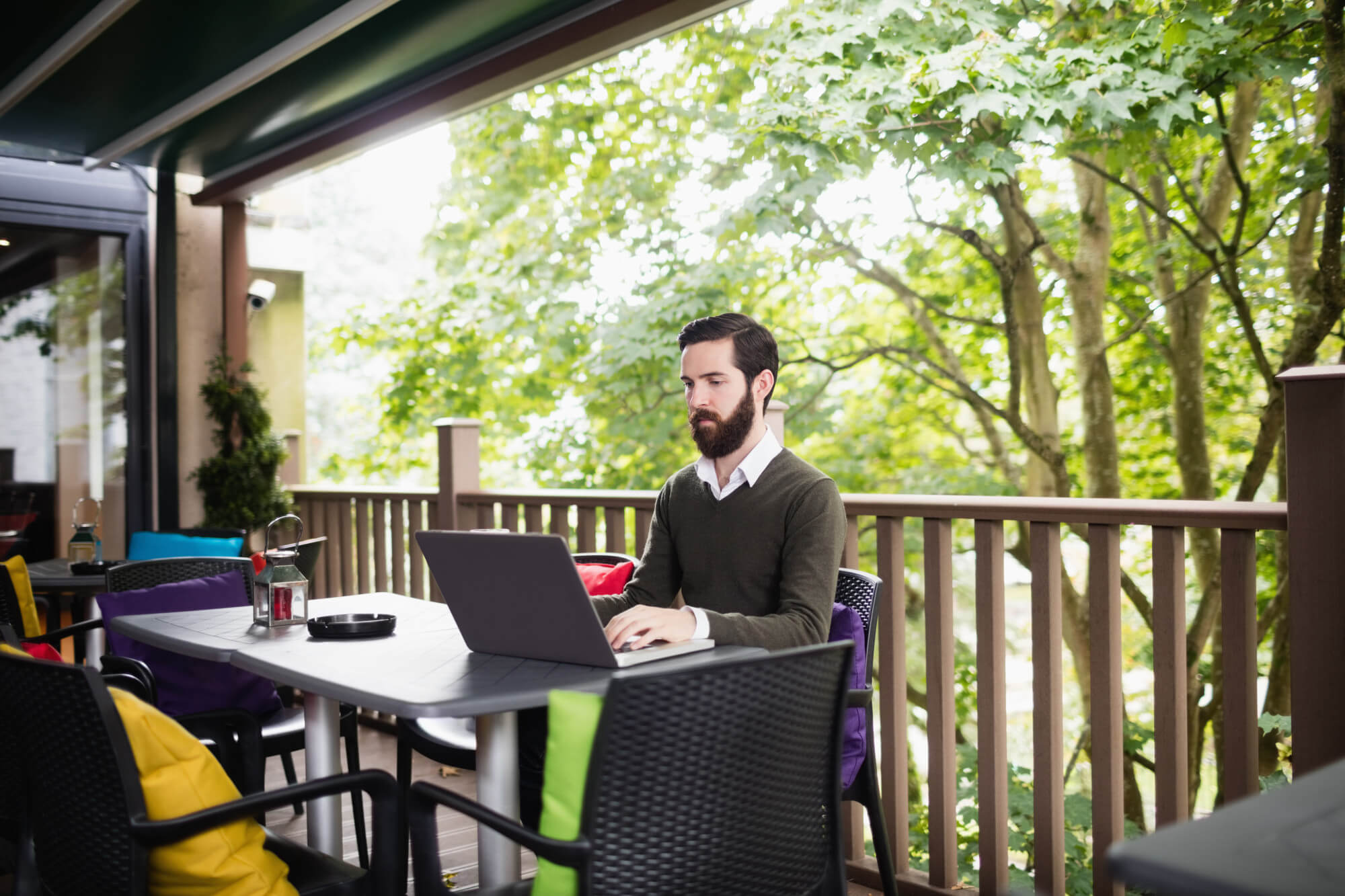
Three in every four UK businesses employ nobody but the owner. That's roughly 4.3 million people running things entirely on their own, and a genuinely significant proportion of them are doing it from a spare room, a converted garage, or a corner of the kitchen table, not a rented office. If that sounds like your business, this article is specifically for you, because working from home comes with a set of genuine, legitimate tax reliefs that we find are consistently under-claimed, simply because the rules feel more complicated than they actually are.
We work with a considerable number of sole traders across Folkestone, Dover, Canterbury, Ashford, and Deal who run their entire business from home, graphic designers, consultants, bookkeepers, and tradespeople who handle their admin and invoicing from a home office between jobs. Nearly every one of them, when we first review their records properly, is either under-claiming these costs or calculating them in a rough, overly cautious way that leaves genuine money unclaimed. So let's walk through exactly how this works, properly.
Two Methods, Same Choice as Vehicle Costs
Much like mileage, working-from-home costs can be claimed in one of two ways: HMRC's simplified flat rate, or a properly calculated proportion of your actual household costs. Understanding which suits your situation better can make a genuinely meaningful difference to your final claim.
Method One: The Simplified Flat Rate
This is the simpler option, requiring no detailed cost calculation at all. HMRC's flat rate scheme lets you claim a fixed monthly amount, based purely on how many hours a month you work from home, regardless of your actual household costs. The rate is £10 a month if you work 25 to 50 hours from home, £18 a month for 51 to 100 hours, and £26 a month for 101 hours or more.
This suits businesses with genuinely modest household costs, or those who'd simply rather avoid the extra record-keeping that calculating actual costs requires. A bookkeeper client of ours near Deal, working from home around 30 hours a month alongside a part-time employed role, found the flat rate produced a perfectly reasonable claim without needing to track her utility bills in any detail at all. For her, the simplicity was genuinely worth more than the modest extra amount actual costs might have produced.
Method Two: Calculating Actual Costs Properly
For many sole traders, particularly those working from home more substantially, calculating your genuine actual costs produces a considerably larger, more accurate claim. This involves working out your total relevant household running costs for the year, then apportioning a fair proportion to business use.
Here's how the calculation actually works, step by step. First, identify your total household running costs that relate to the home as a whole: heating, electricity, water rates, council tax, home insurance, and, if you rent, your rent, or if you own with a mortgage, the interest element only, never the capital repayment. Second, work out what proportion of your home is used for business, typically calculated by the number of rooms used for business divided by the total number of rooms in the property, excluding bathrooms and hallways from the room count on both sides of that calculation. Third, if the room isn't used exclusively for business, which is genuinely common and, as we'll come to, often advisable, apply a further reduction based on the proportion of time it's used for business purposes.
A Full Worked Example
Let's make this properly concrete. Say you're a graphic designer working from a converted spare bedroom in a five-room house near Canterbury, using that room as your office for roughly 40 hours a week, but the room also doubles as a guest bedroom on the occasional weekend a family member visits.
Your total relevant annual household costs, heating, electricity, water, council tax, insurance, and mortgage interest, come to £6,000 for the year. One room out of five is used for business, giving a 20% room-based proportion, or £1,200. Because the room isn't used exclusively for business, being genuinely used as a bedroom on perhaps ten weekends a year, you'd apply a further reasonable reduction to reflect that mixed use. If we estimate the room is used for business roughly 90% of the time across the year, factoring in occasional guest use, your final claim comes to approximately £1,080.
Compare that to the simplified flat rate: working roughly 160 hours a month from home would qualify for the top band, £26 a month, or £312 for the year. In this particular example, calculating actual costs properly produces a claim more than three times larger than the flat rate would. That difference is genuinely significant, and it's precisely why we'd encourage anyone working from home substantially to at least run the comparison before defaulting to the simpler option.
Why We Deliberately Avoid Recommending 100% Exclusive Business Use
This is one of the more important, and more commonly misunderstood, details in this entire topic, so it deserves proper attention. If a room in your home is used 100% exclusively for business, with no personal use whatsoever, you can technically claim a correspondingly larger proportion of your household costs against it. But this comes with a genuine downside worth knowing about upfront: it can affect your entitlement to full Private Residence Relief from Capital Gains Tax when you eventually come to sell your home.
Ordinarily, selling your main home is entirely free of Capital Gains Tax. But if part of your property has been used exclusively for business, with no personal use at all, HMRC can treat that portion differently when calculating any gain on sale, potentially creating a small Capital Gains Tax liability on that specific proportion of the property.
We'd almost always recommend keeping a room in genuinely mixed use, even minimally, a spare bed that's occasionally used, a corner that's also where you keep personal items, specifically to preserve full Private Residence Relief down the line. A consultant client of ours near Ashford had been claiming 100% exclusive business use of his home office for several years before coming to us; we adjusted this to reflect the genuine, if minor, personal use the room also saw, protecting his full relief on a future sale while barely affecting the size of his ongoing expense claim at all. It's a small adjustment with a potentially significant long-term benefit.
What Costs Genuinely Qualify
Beyond the core costs already mentioned, heating, electricity, water, council tax, insurance, and mortgage interest or rent, a few other genuinely relevant costs are worth including in your calculation. A proportion of your broadband and landline costs, if genuinely used for business purposes. A proportion of repairs specifically relating to the business-use area of your home, redecorating your home office, for instance, though general repairs to the whole property, a new roof or boiler, are typically apportioned more broadly across the whole home rather than attributed specifically to the business-use room.
What Doesn't Qualify
It's worth being direct here too. The capital repayment portion of your mortgage never qualifies, only the interest element does. General home improvements unrelated to the business-use area, a new kitchen, landscaping the garden, aren't claimable in any proportion. And costs that would exist entirely regardless of whether you worked from home or not, in their full, unapportioned amount, need to be genuinely apportioned fairly rather than claimed in full simply because you happen to work from that property.
A Note on Mortgage Lenders and Home Insurance
This is a detail that occasionally surprises business owners, and it's worth flagging honestly rather than leaving it unmentioned. Some mortgage agreements and standard home insurance policies technically require you to notify your lender or insurer if you're running a business from the property, particularly if it involves clients visiting, equipment beyond a normal laptop and desk, or any structural change to accommodate the business.
In practice, for the vast majority of sole traders simply working at a desk from a spare room, answering emails and handling admin, this rarely causes any genuine issue, and lenders and insurers are generally accustomed to this kind of low-impact home working. But if your home-based business involves clients visiting regularly, stock or equipment stored on the premises, or more substantial use of the property, it's genuinely worth a quick check with your insurer to confirm your policy still provides full cover. This isn't a tax matter as such, but it's a genuinely sensible practical step worth taking alongside setting up your expense claim properly.
Business Rates: A Rare but Real Consideration
For most sole traders working from a spare room or home office, no separate business rates liability arises; the property remains assessed for council tax as a normal residential home. However, in specific circumstances, particularly if a significant part of the property is adapted specifically and substantially for business use, has separate access, or is used to see a considerable number of clients or customers regularly, a portion of the property can occasionally become liable for business rates instead of, or alongside, council tax.
This is genuinely rare for the sole traders we work with, most of whom are using a home office for admin and computer-based work rather than running a business that sees regular footfall from the public. But if your home working arrangement involves something more substantial, a therapist seeing clients regularly in a converted room, for instance, it's worth a specific conversation to check whether this applies to your situation.
Which Method Should You Actually Choose?
As a general guide, the simplified flat rate tends to suit sole traders working from home on a more modest, part-time basis, where actual costs would likely produce a similar or even smaller claim once properly calculated, and where the reduced record-keeping burden holds genuine appeal. Calculating actual costs properly tends to suit sole traders working from home substantially, often full-time, particularly in a property with higher genuine running costs, where the actual proportion attributable to the business meaningfully exceeds what the flat rate would provide.
We'd always recommend running the comparison properly at least once, ideally with your accountant, rather than assuming either option without checking. A driving instructor client of ours, who genuinely only used his home for a small amount of admin work each week, found the flat rate was clearly the better, simpler option once we ran the comparison; a graphic designer working from home full-time, as in our earlier example, found the opposite entirely.
Keeping Proper Records to Support Your Claim
Whichever method you choose, keep clear supporting records. For the simplified flat rate, a simple log of your monthly hours worked from home is sufficient, ideally noted consistently rather than estimated retrospectively at year-end. For actual costs, keep your utility bills, council tax statements, mortgage interest certificate or tenancy agreement, and home insurance documents, alongside a clear, honest note of how you calculated your room-based and time-based apportionment.
A hairdresser client of ours near Hythe, who runs her admin and bookings from a home office between salon shifts, keeps a simple spreadsheet updated quarterly with her relevant household bills and a brief note of her working pattern that quarter. It takes her perhaps twenty minutes every three months, and it means her annual claim is properly evidenced and genuinely accurate, rather than a rough guess reconstructed under pressure at year-end.
Putting This Into Practice
If you're currently using the flat rate without ever having compared it against actual costs, it's genuinely worth running that comparison at least once, particularly if you work from home substantially. If you're currently claiming 100% exclusive business use of a room, it's worth reviewing whether adjusting to reflect genuine mixed use might better protect your Private Residence Relief without meaningfully affecting your expense claim. And if your home working arrangement has grown more substantial over time, more clients visiting, more space dedicated to the business, it's worth checking whether anything has changed regarding insurance, your mortgage terms, or potential business rates liability.
How We Help Home-Based Sole Traders Across Kent
As a two-partner practice based in Folkestone, we review every home-based client's working-from-home claim properly, comparing both methods honestly rather than defaulting to whichever is easiest to calculate. We'll also flag the Private Residence Relief consideration directly if it's relevant to your situation, something that's easy to overlook entirely until it matters, often years down the line when a property sale is already underway.
If you're a sole trader working from home across Folkestone, Dover, Canterbury, Ashford, or Deal, and you'd like a proper review of whether you're claiming the right amount, or using the right method, get in touch with us at Cannon Accountants. We'll run the numbers honestly and make sure your claim reflects your genuine circumstances.
---
Frequently Asked Questions
Can I claim working-from-home expenses if I also rent separate business premises?
Yes, provided you genuinely do some business work from home too, admin, invoicing, or client calls outside your main premises, a proportionate claim for that specific use remains valid, calculated on the same basis as if home working were your primary arrangement.
Does it matter whether I own or rent my home?
Not fundamentally; the calculation principle is the same either way. Homeowners apportion mortgage interest, rather than the capital repayment, while renters apportion their rent directly, both alongside the other shared household costs like heating, electricity, and council tax.
Can I switch between the flat rate and actual costs method from year to year?
Yes, unlike the mileage method for a specific vehicle, working-from-home expenses can generally be recalculated and switched between methods each tax year, so it's worth reviewing which approach suits you best on an ongoing basis rather than assuming a single decision applies indefinitely.
Do I need to inform HMRC that I'm working from home?
Not as a separate notification; you simply reflect the expense properly within your Self Assessment return each year. It's worth keeping your supporting calculations and records available, though, in case HMRC ever queries the figure.

.jpg)
.jpg)
.jpg)
